Skip to content

Jay

Co-founder, simlir

Jay is the co-founder of simlir, working on product intelligence, product data, and search experiences for retailers and shopping assistants.

See an example
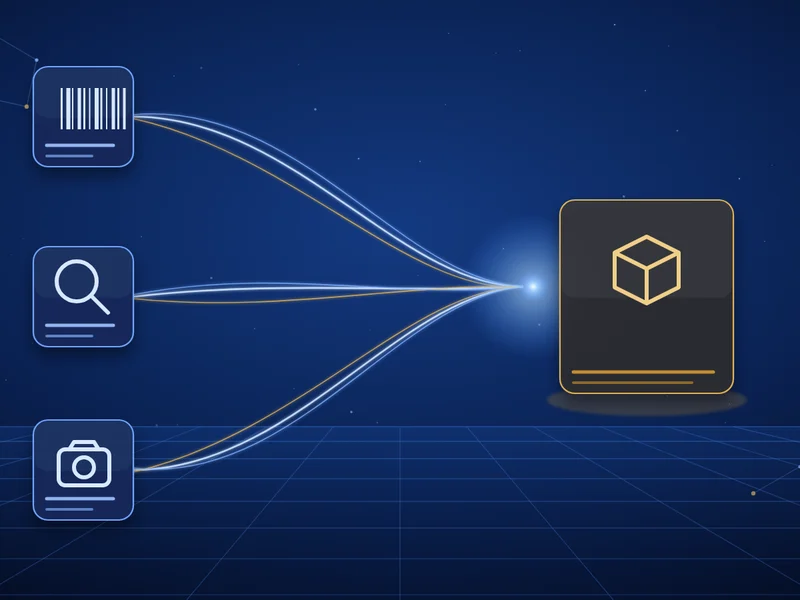
Barcode, search lens and camera cards in a row with the barcode card highlighted, showing exact lookup alongside text and image search.

Exact lookup or search? Choosing by what the shopper already knows

If a shopper already has a barcode, part number or receipt, look the product up exactly. If they only know what they want, search. A practical guide to choosing between exact lookup, semantic search and image search, with reorder, receipt, barcode and price-check examples.


Jay
A glowing clock at the centre of a data network surrounded by price tag, pound sign, shop and TV cards, showing price snapshots with a checked time.

How fresh does shopping price data need to be?

There is no single right age for a product price. It depends on how fast prices move in the category and what the shopper is about to do with the number. Here is how to decide, how to show a snapshot date, and how to word older prices honestly.

Jay
Cracked, tilted page and warning cards on the left, with clean light trails leading to a highlighted structured data card on the right.

Why scraped retailer pages are a fragile base for shopping assistants

Scraping retailer pages looks like the quickest way to give a shopping assistant product data. In practice, layouts change, requests get blocked, identifiers go missing and prices go stale. This guide sets out where scraped data breaks, what a structured product source changes, and the honest trade-offs either way.

Jay
A glowing globe with orbit rings linked to pound sign, price tag, kettle and shop cards, showing product search across several countries.

Selling in more than one country: building multi-market product search

A shopper in Manchester and a shopper in Munich can ask for the same kettle and need different answers. This guide covers market codes, local-currency prices, shipping origin versus delivery destination, and how to compare prices fairly when your product search spans more than one country.

Jay
Three headphones product cards side by side on a glowing floor with the middle one highlighted, showing a fair like-for-like comparison.

How to compare products fairly in a shopping assistant

A fair product comparison uses the same attributes, the same market, dated prices and matching variants, then shows trade-offs instead of naming a single winner. Rules and a table layout for shopping assistant comparisons.

Jay
Price tag, barcode, attribute list and product photo cards joined by light trails into a highlighted shopping bag card, showing complete merchant product data.

Shopify merchants and AI shopping: what to check in your product data

Shoppers are starting to ask AI assistants what to buy, and those assistants can only recommend what they can understand. If you sell on Shopify, a few fields decide whether your products are shown accurately: titles, variants, barcodes, product type, specifications in metafields, images and availability. Here is what to check in each.

Jay
A glowing line passes through a chat bubble, a pound sign, a ruler, a sound wave and a house icon before reaching a highlighted dishwasher card, showing a sentence turned into search constraints.

Turning a shopper's sentence into search constraints

"A quiet dishwasher for a small flat under £400" holds a budget, a size limit, a noise preference and a few unspoken needs. Here is how to split a shopper's sentence into hard and soft constraints, handle units and exclusions, and know when to ask a follow-up question.

Jay
Cards for text search, image search and barcode lookup in a row, with a highlighted stack of coins card representing credit costs.

Estimating product-search API costs for a prototype

A simple way to estimate product-search costs before you build: count calls per conversation, multiply by expected volume, then cut waste with caching and better first queries. Includes a worked example using Simlir's live credit prices.

Jay
Kettle, lamp, armchair and TV product cards feeding light trails into a highlighted shop-front card, showing a retailer's catalogue reaching AI shopping answers.

How UK retailers can show up accurately in AI shopping answers

AI shopping assistants can only describe your products as well as your product pages describe them. A practical guide for UK ecommerce teams on identifiers, specifications, structured data, clear prices and stock, crawlable pages and consistent naming.

Jay
Store, barcode and price tag cards connected by light trails to one highlighted headphones card, showing listings matched to the same product by identifier.

GTIN, MPN and SKU: matching the same product across retailers

Two retailers list the same headphones with different titles, photos and descriptions. How do you know they are the same product? This guide explains GTINs, MPNs and SKUs, how check digits work, a sensible matching order, and the pitfalls that lead to wrong price comparisons.

Jay
A glowing blue path links a chat bubble, a search lens, a tick and a checklist, ending at a highlighted shopping bag card, showing an AI assistant shopping step by step.

What is agentic commerce? A plain guide for product teams

Agentic commerce is shopping where an AI assistant does part of the work for the shopper: understanding the need, finding products, comparing them and handing over to a retailer. What it is, how it works, and what product data it depends on.

Jay
Abstract semantic product database linking meaning, product records and retrieval relationships

What is a semantic product database?

A semantic product database retrieves products by meaning and intent, returning structured records an application can inspect, compare and explain.

Jay